According to the White House, the move has been taken to safeguard national security, expanding the restricted list from 12 to 19 countries.
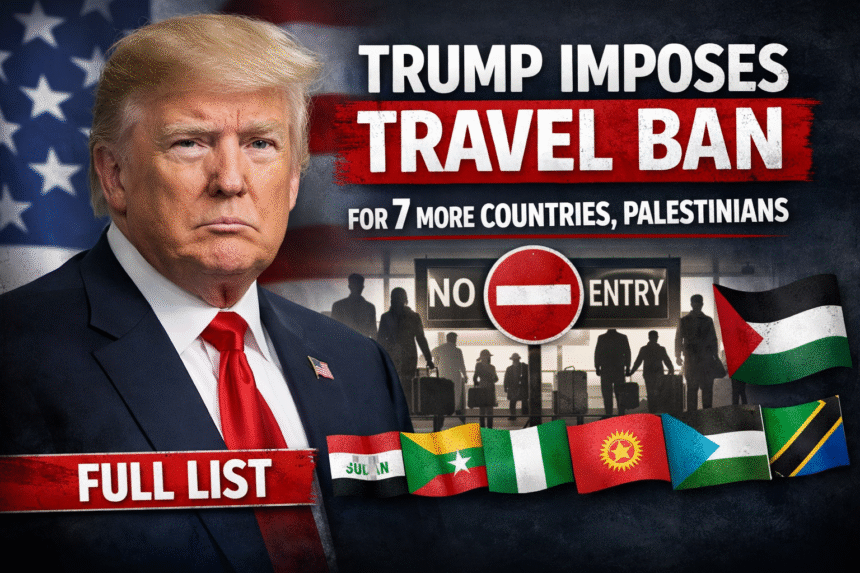
US President Donald Trump has approved a new proclamation that places entry restrictions on foreign nationals from seven more countries. The announcement was made on Tuesday, with the White House confirming that the total number of affected nations has now risen to 19.
The administration stated that the decision was implemented to “ensure the safety and security of the United States.” Under the latest update, the following seven countries have been newly added to the restricted list:
- Syria
- Burkina Faso
- Mali
- Niger
- South Sudan
- Laos
- Sierra Leone
Syria was included following a deadly ISIS ambush that resulted in the deaths of two US soldiers and an American civilian interpreter. The victims, Brian Torres-Tovar and William Nathaniel Howard, were the first US personnel killed since the removal of former Syrian President Bashar al-Assad in 2024.
With these additions, the total number of countries facing full entry bans has increased from 12 to 19. The previously listed nations include Afghanistan, Burma, Chad, the Republic of the Congo, Equatorial Guinea, Eritrea, Haiti, Iran, Libya, Somalia, Sudan, and Yemen.
In addition, the Trump administration has enforced complete travel restrictions on individuals carrying travel documents issued by the Palestinian Authority.
Partial travel restrictions imposed on additional countries
The proclamation also outlines partial entry limitations for individuals from several high-risk nations. These include:
- Burundi
- Cuba
- Togo
- Venezuela
- Angola
- Antigua and Barbuda
- Benin
- Côte d’Ivoire
- Dominica
- Gabon
- The Gambia
- Malawi
- Mauritania
- Nigeria
- Senegal
- Tanzania
- Tonga
- Zambia
- Zimbabwe
Meanwhile, Turkmenistan has been taken off the restricted list following what the administration described as “constructive engagement” with the United States. However, despite the easing of non-immigrant visa rules, Turkmen nationals continue to face restrictions on immigration to the US.